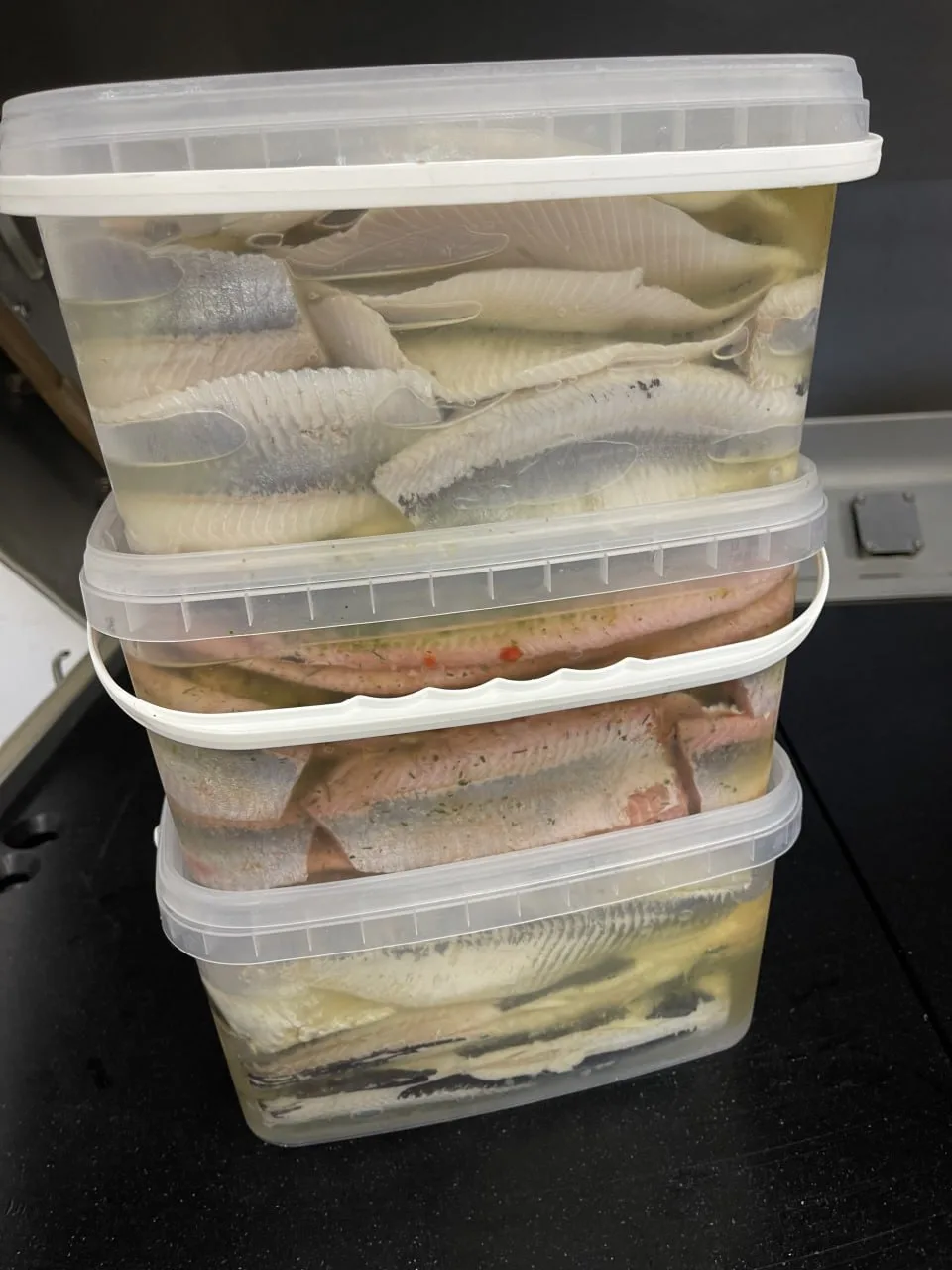
Salted Fish Products
Products (9)
| Product | Package | Origin |
|---|---|---|
| Atlantic herring, salted 400+ | 8 kg | Lithuania |
| Atlantic herring, salted 450+ | 8 kg | Lithuania |
| Atlantic herring fillet (salted) in oil | 3 kg | Lithuania |
| Atlantic herring fillet (salted) in brine | 3 kg | Lithuania |
| SCANDINAVIAN Atlantic herring fillet (salted) in oil | 3 kg | Lithuania |
| Lightly salted Atlantic herring "IVASI" in oil | 3 kg | Lithuania |
| Lightly salted Atlantic herring "IVASI" in oil | 3 kg | Lithuania |
| Marinated mackerel, gutted, headless | 4 kg | Lithuania |
| Salted mackerel, gutted, headless | 4 kg | Lithuania |
About salted fish products
Salted fish products are a range of fish and seafood prepared using one of the oldest preservation methods — salting. Salt draws moisture out of the fish tissue and inhibits microbial activity, so the product keeps longer and acquires a rich, characteristic flavour. The range includes salted herring, mackerel, salmon fillet, roe and other products, prepared by dry salting or in brine.
Nutritional value
Salted fish retains most of the nutritional properties of fish: complete protein, omega-3 fatty acids, vitamin D and B vitamins, and minerals. Oilier species (herring, mackerel, salmon) are particularly valued for their unsaturated fats. It is worth remembering that salting increases the salt content of the product, so it should be eaten in moderation.
Preparation methods
Fish is salted either by the dry method (rubbing the fish with salt) or by the wet method — keeping it in brine. Spice blends add piquancy: bay leaves, black pepper, dill and onion. More heavily salted fish can be soaked in water before eating to reduce its saltiness.
Culinary notes
Salted fish is usually eaten cold — as a starter with boiled potatoes, a slice of rye bread or onion rings. It is ideal for herring dishes, salads, sandwiches and appetiser platters. Sour cream, vegetable oil and fresh green herbs balance the flavour.