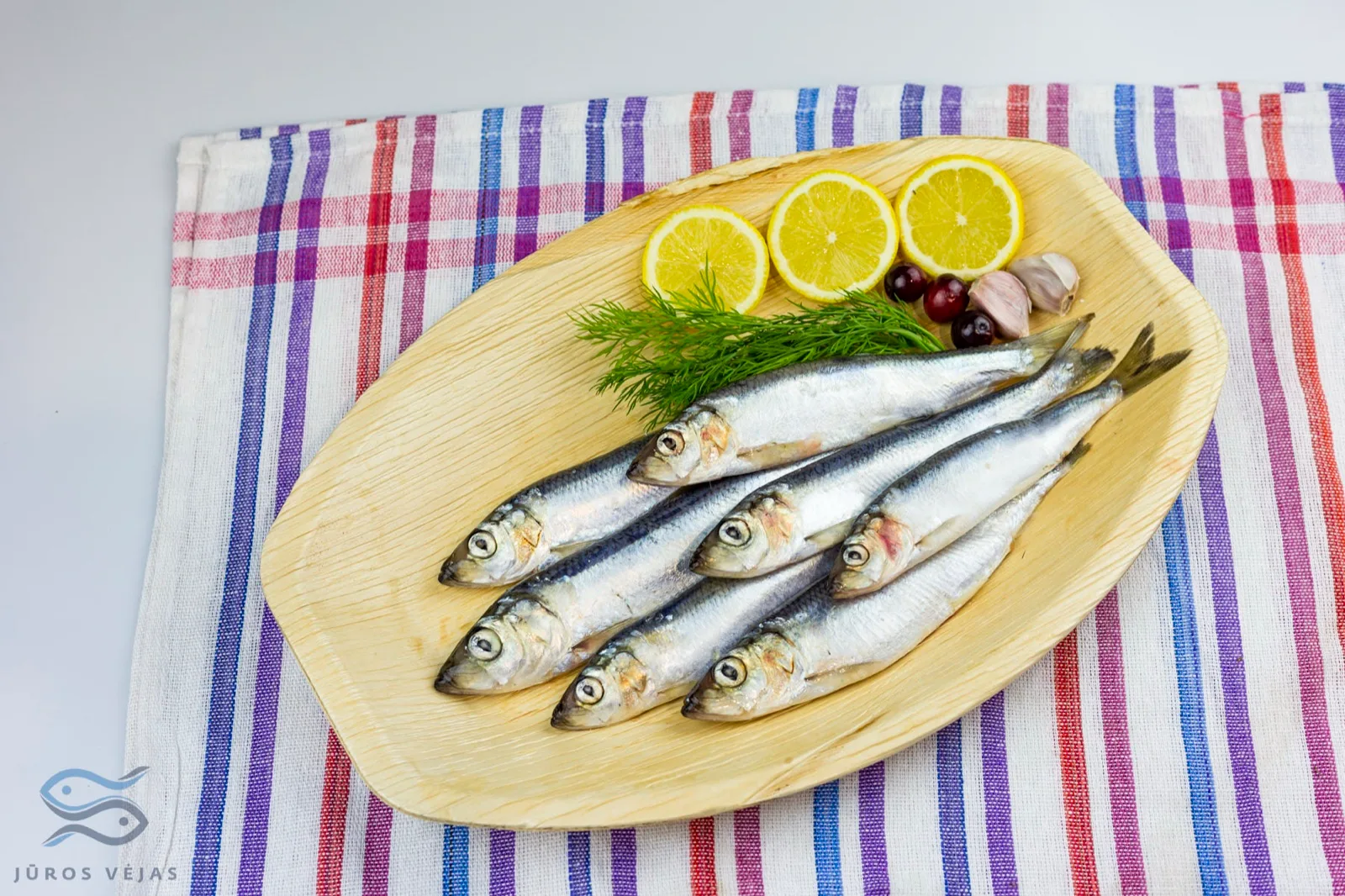
Baltic Herring
Clupea harengus membras
Products (2)
| Product | Package | Origin |
|---|---|---|
| Ungutted, chilled | — | Lithuania |
| Ungutted, frozen | ~10 kg | Lithuania |
About Baltic herring
Baltic herring (Clupea harengus membras) is a subspecies of Atlantic herring adapted to life in the brackish Baltic Sea, which is where its name comes from. It is a schooling pelagic fish with a dark back and shiny silver flanks; its scales are small, thin and easily shed. Compared with oceanic Atlantic herring, Baltic herring is smaller — usually 18–25 cm long and weighing about 40–80 g. It is one of the main commercial fish species in Lithuania’s Baltic Sea zone.
Nutritional value
Baltic herring is an oily fish containing omega-3 fatty acids (EPA and DHA). It is rich in complete protein, vitamin D and vitamin B12, as well as selenium and iodine. It is an inexpensive, nutritious sea fish.
Fishing seasonality
Fat content varies over the year: it is highest before spawning, in late autumn and winter, when the fish have accumulated the most fat. In spring, Baltic herring migrate to the coast and into the Curonian Lagoon to spawn. Fish size depends on age and fishing area — fish caught in the open sea are larger than those caught inshore.
Culinary notes
Baltic herring is versatile: it is hot- and cold-smoked, fried, stewed, marinated and salted. Its oiliness makes it well suited to grilling. Classic pairings — onion, dill, mustard, lemon and an acidic marinade — balance its rich flavour. Smaller specimens are convenient to fry on the bone.