European Catfish
Silurus glanis
Products (2)
| Product | Package | Origin |
|---|---|---|
| Ungutted, chilled | kg | Lithuania |
| Ungutted, frozen | kg | Lithuania |
About the European catfish
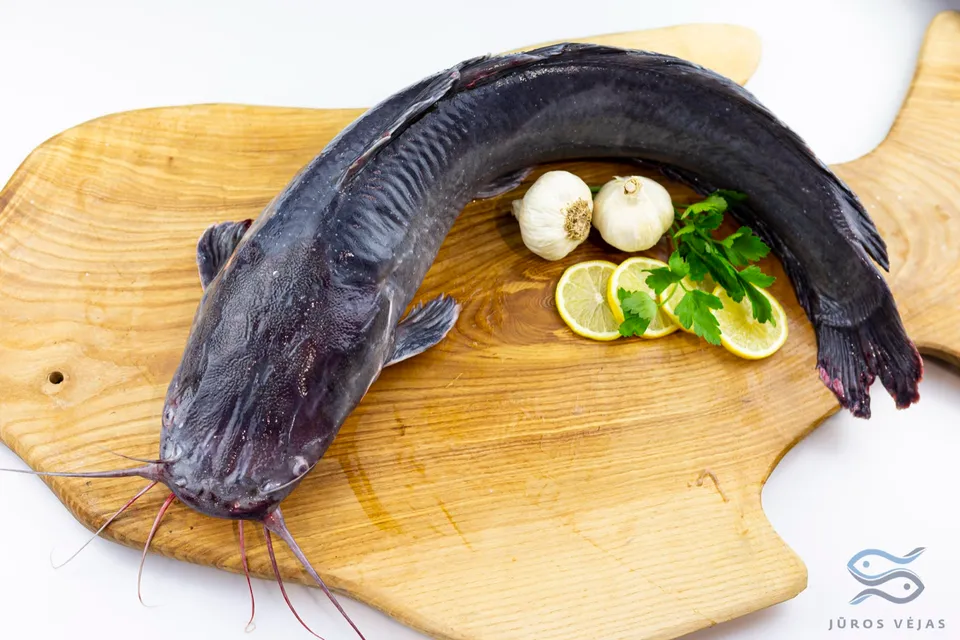
The European catfish (Silurus glanis) is the largest predatory freshwater fish in Europe and belongs to the family Siluridae. The body is elongated, scaleless and covered with mucus; the head is broad and flattened, and the large mouth has numerous small teeth. Its characteristic three pairs of barbels help it find its way in murky water near the bottom. The back is dark greenish, the flanks are marbled with spots and the belly is pale. It is a bottom-dwelling fish, active at night, that lives in the deeper parts of rivers and lakes in the fresh and brackish waters of Europe and Central Asia.
Nutritional value
Catfish flesh is white, fatty and mild in flavour, with almost no small bones. It offers good-quality protein and unsaturated fatty acids, including omega-3. It contains vitamins A and D, B vitamins and minerals: phosphorus, potassium and selenium. It is filling yet easily digestible, which makes it suitable for people of all ages.
Fishing seasonality
Catfish feed most actively and are at their fattest during the warm season, from late spring to autumn, when water temperatures are high. After spawning (May–June) the fish recover intensively. Size varies greatly: market-size specimens usually weigh a few kilograms, but in the wild the catfish grows exceptionally large.
Culinary notes
The firm, fatty flesh is ideal for frying, stewing, smoking and grilling: it does not break up and keeps its shape. The fillet pairs well with lemon, garlic, fresh herbs, white wine and spicier seasonings that balance its richness. The flesh of larger fish is worth marinating.