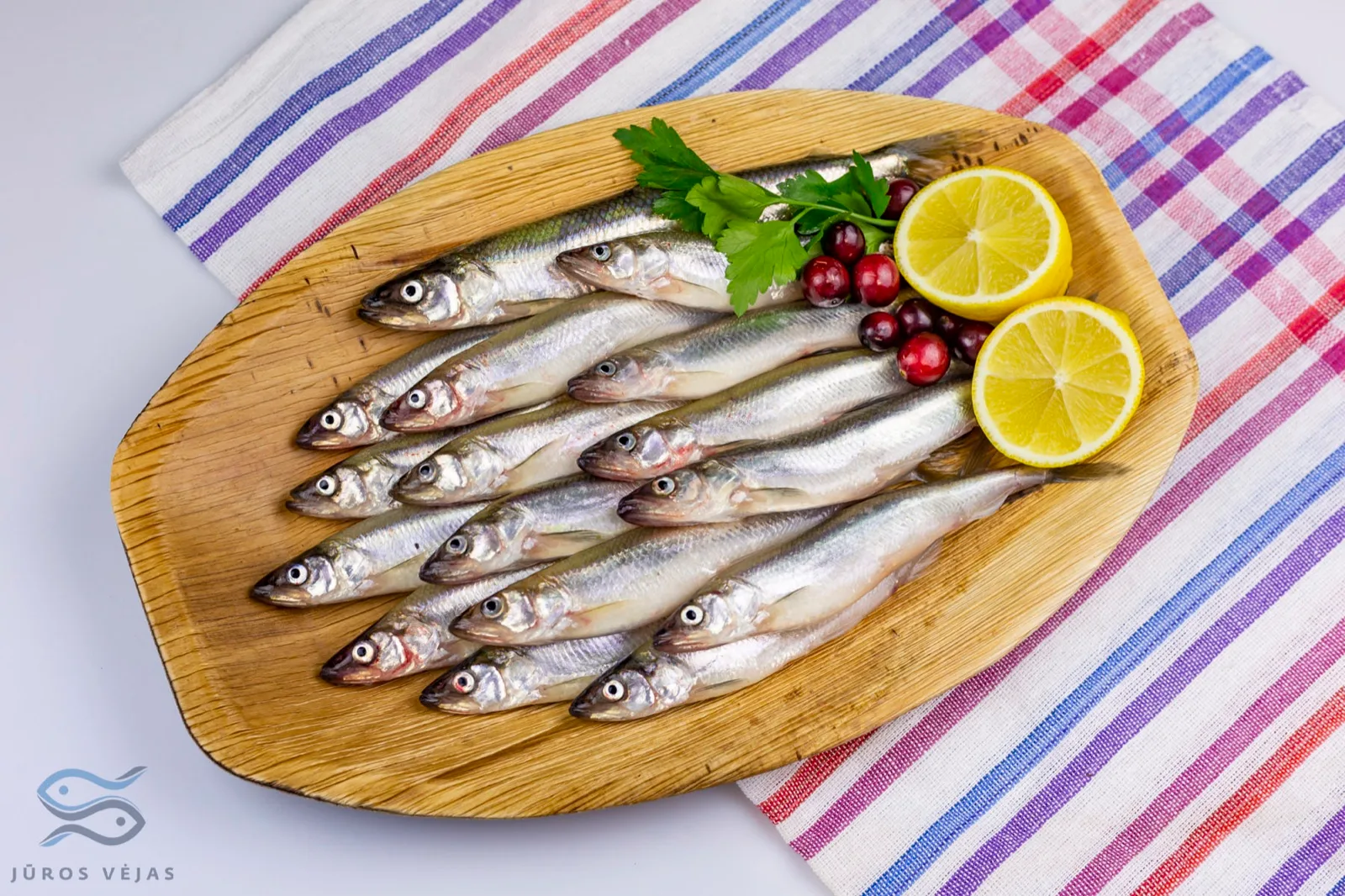
European Smelt
Osmerus eperlanus
Products (2)
| Product | Package | Origin |
|---|---|---|
| Ungutted, chilled | 1 kg | Lithuania / Estonia |
| Ungutted, frozen | ~10 kg | Lithuania / Estonia |
About European smelt
European smelt (Osmerus eperlanus) is a small fish of the smelt family (Osmeridae) found in the waters of northern and north-western Europe, especially in the Baltic, North and White Seas and in the rivers and lakes of their basins. Its body is elongated and slender, usually 15–18 cm long; the back is greenish brown, the sides bluish silver, the belly white, and the scales small and thin. It has a characteristic smell reminiscent of fresh cucumbers. Its diet consists of zooplankton and bottom-dwelling invertebrates.
Nutritional value
Smelt is a lean, easily digestible fish valued for its complete protein. It contains omega-3 fatty acids, vitamin D and B vitamins (especially B12), as well as phosphorus, iodine and selenium. The small fish are often eaten bones and all, which makes them a good source of calcium.
Fishing seasonality
Smelt is caught in the largest quantities in early spring, during the spawning migration, when it moves in shoals from the sea into the lower reaches of rivers. During this period the fish are at their fattiest and most aromatic — the spring smelt-fishing tradition is also linked to this. Size and fat content vary depending on the form and the fishing area.
Culinary notes
Because of its small size, smelt is most often pan-fried after being dredged in flour; it is also smoked or marinated. The thin body cooks quickly, forming a crisp crust. It goes well with lemon, fresh herbs, butter and potatoes; smoked smelt is suitable for appetisers.