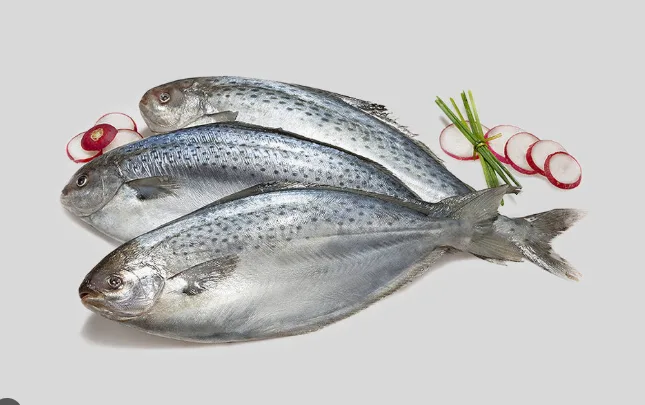
Brazilian Butterfish
Stromateus brasiliensis
About Brazilian butterfish
The Brazilian butterfish (Stromateus brasiliensis) is a marine fish of the butterfish family (Stromateidae) found in the Southwest Atlantic: from the coast of southern Brazil to Tierra del Fuego and Argentina. It is a benthopelagic species that keeps to depths of 20–130 m above sandy or muddy bottoms. The body is laterally compressed and fairly deep, with a blue-green back and a silvery-white belly, and the upper side is marked with round dark blue spots. Adult fish grow to approximately 25–65 cm in length.
Nutritional value
Butterfish have white, soft, oily flesh that makes a filling meal. They are high in protein and contain omega-3 fatty acids, B vitamins, phosphorus, potassium and selenium.
Fishing seasonality
The Brazilian butterfish is regarded as an important commercial species and is caught by trawl all year round. Fat content and size vary with the spawning cycle and the fishing area: before spawning, during the period of intensive feeding, the flesh is at its oiliest and most filling.
Culinary notes
Butterfish is at its best smoked or air-dried — the oily flesh takes on a rich flavour. It is also excellent fried, braised or boiled. It pairs well with vegetables and light, low-fat sauces that do not mask the delicate flavour of the fish.